Garden Zone

As part of my Python programming practice, I came up with a module and function that randomly generates 5 USDA Plant Hardiness Zones / Garden Zones.

def randomgardenzone():
    test_list = ['a', 'b']
    for i in range(1, 5+1):
        x = randint(1, 13)
        res = choice(test_list)
        print(x, res)

randomgardenzone()

For context: the US Department of Agriculture has 13 designated “zones” for the country, based on the average annual min temperature. Each zone number is 10 degrees F apart. There is a further subdivision of zones with a letter ‘a’ or ‘b’, where ‘b’ is 5 degrees F warmer than ‘a’.

These zones are useful for gardeners because we can confidently plant specimens that are hardy (cold/frost/freezing temperature tolerant) to their zone. This is why mango and bananas don’t grow in Minnesota, while they may thrive in a Floridian garden. The Minnesotan would have to have a toasty heated greenhouse in order to cultivate mango trees or bananas through their winter. (Did you know the banana plant is actually an herb, not a tree?)

I’m curious how some plants are able to be cold-hardy and resist freezing. When it gets below 32’F, the water in the plant cells wants to freeze and expand. This would rupture the cell walls and make the plant loose its structure, becoming frost damaged, mushy, and sadly, not salvageable. I heard that cold-hardy plants contain a natural antifreeze that prevents this. I’m curious how antifreeze works, and if it’s similar to what’s used in automobiles. Dianthus is an example of a common plant that is cold-hardy (you can grow them in Alaska), and in fact they need a cold season in order to thrive.

Python Things I learned:

  • Use “for i in range(1, 5)”, not just “for i in (1,5)”. A simple doh!-type mistake!
  • range(a, b) works like [a, b) – it is exclusive of the b value. However, randint(a, b) is inclusive of the b value.
  • The “choice( )” function from the random module let’s you pick a random item from a list. This was useful to pick the zone letters ‘a’ or ‘b’, since randint( ) is only used to pick a random integer.

“I don’t know where to start”

This guy Zook has a great noggin and head.

I’m reading “Own Your Weird” by Jason Zook, and want to share this golden nugget with you. Maybe it’ll lift you up if you’re embarking on a hard quest like me (like learning computer programming, for real this time, or reducing material consumption/living minimally and realizing how much is “enough”):

“Our brains have this mystical, magical, commanding power over us. It can be incredibly difficult to challenge our own thoughts. Even if we have data from other sources, we often still can’t get past our own mental barriers.

Assumptions about starting your next business/project/whatever:

I’m amazed at how often I hear from people who are talking themselves out of being successful…[with] phrases like:

“I don’t know where to start.”

By picking up this book, you are starting. By wanting to start, you are starting. So check that one off the list right now. But you know those things aren’t enough. Eventually, you just have to put one foot in front of the other (or click a mouse one click in front of the other?). Start small, start scared, but just start.

Tea Box Musings

I came across this surprisingly eloquent quote from the side of a Trader Joe’s Peppermint Tea box:

This first cup moistens my lips and throat.

The second shatters my loneliness.

The third causes the wrongs of life to fade gently from my recollection.

The fourth purifies my soul.

The fifth lifts me to the realms of the unwinking gods.

~Chinese mystic, Tang Dynasty

As I both nod and hum in agreement, I am left asking:

  • What is a Chinese ‘mystic’? (Do they also conjure those wise proverbs?)
  • Who are these ‘unwinking gods’? Are they benevolent or cruel?

Here’s a cuppa to quenched thirst and purified souls.

Contact

Have a question? Interested in discussing something you read here? Feel free to contact me!

← Back

Thank you for your response. ✨

Warning
Warning
Warning
Warning.

Lettuce Rest

Lately I’ve been working on hard projects and this leaves me exhausted. Mentally exhausted from thinking about career and what aspects of lifestyle I desire. Consuming sustainability and gardening tutorials through books and YouTube videos contributes to the chatter in my mind. It’s all in my head, but it makes me tired.

What I’ve found to be helpful is:

  • Rest – sleep enough hours, or even an hour or two more than usual. Go to bed around the same time, take naps when needed.
  • Eat healthy – an occasional main or side salad harvested from the garden, a colorful vegan meal, homemade baking even if the muffins sink in the middle and look funny.
  • Exercise – go on walks, even just for a few blocks. You won’t get that wet if it’s raining a little.
  • Decompress – talk to someone who is a good listener, or write about the chatter in a journal. Getting it out helps. Being able to pen down a looming worry onto a few lines on paper shows that it’s not too big to be written about, and therefore can be managed bit by bit.

Here’s to working towards big goals and resting along the way!

Tip: This photo is of some “living lettuce” I bought at the grocery store and replanted. These come with the roots intact and last longer in the fridge. Enjoy most of the leaves, save the core of innermost leaves and roots intact, and plant in soil. It’s a similar cost to buying seedlings (about $3 for 3 lettuce plants), plus you get to enjoy more harvest before planting!

Mark Haidar

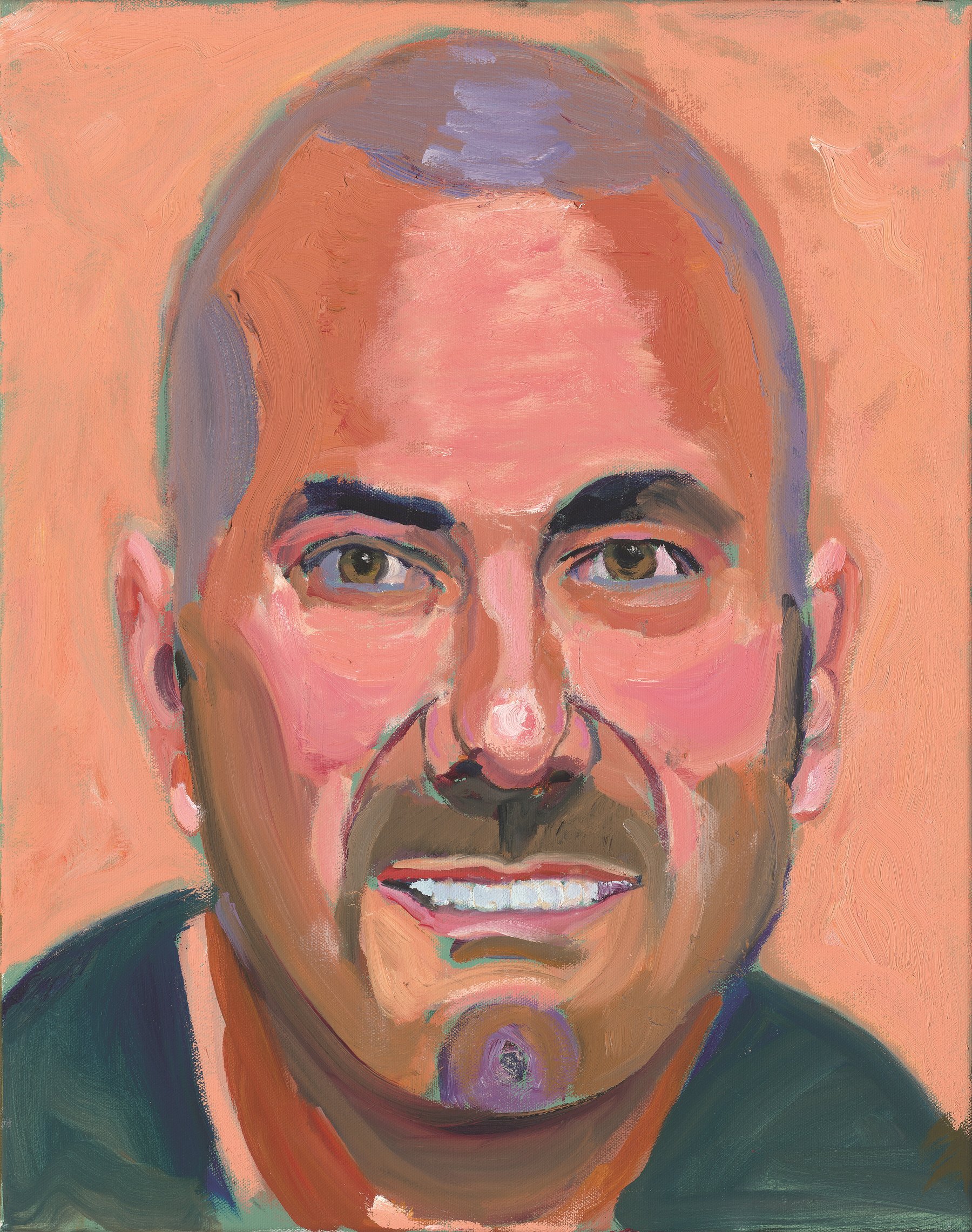
I’ve been enjoyed listening to George W. Bush’s audiobook, Out of Many, One. It is a diverse collection of stories and portraits of various immigrants to the United States, read by the former president in full Texan glory.

At the end of each story, the featured person describes the American dream in his or her own words. One particular man’s definition, Mark Haidar, struck me deeply. So deeply that I re-wound and repeated his section 3 times while audiobook-listening and lock-picking one evening. So deeply that I also repeated his chapter twice the next afternoon. So deeply that I don’t have a copy of the e-book, but I listened and transcribed his American dream for you too to enjoy. I hope it resonates with you.

Oil portrait of Mark Haidar by George W. Bush

My name is Mark Haidar. To me, the American dream means freedom.

I guess for me it all started when I read the declaration of independence and the promise of life, liberty, and the pursuit of happiness. As a 12 years old boy that had none of the 3, I gravitated toward that promise. I wanted to live life in liberty, pursuing happiness. As a person with an entrepreneurial spirit, I gravitated toward that.

The journey to becoming an American was joyfully arduous, and to me becoming an American is the greatest honor to have. It is simply because of what being an American and what the American dream means to me, and it means a lot of things. The American dream is not about having a house in the suburbs, a job, and a car. You can have that anywhere in the world, or at least in a lot of places in the world.

Out of Many, One – by George W. Bush


The American dream is about having a voice, rather than an opinion. The American dream means you have access to opportunity, but without a guarantee for success. The American dream means that you’re compassionate and care about other humans. The American dream means that you reward hard work. The American dream is being a doer, not just a thinker. It is about bringing ideas to life, and not just talking about them. The American dream is believing in yourself and what you’re capable of doing. Most of all, the American dream is about the fact that you’re allowed to dream big. But more importantly, that you’re allowed to fail, miserably.

Immigrants understand what the American dream is all about – that’s because they grew up dreaming it! And when they’re here, they don’t take it for granted. They work for it. To them, the American dream is something to be earned and not given. An immigrant is an American by choice, and not by birth. An immigrant – you have to make a lot of sacrifices, leaving your family, friends, your safety net, your language, and home behind. Leaving everything you know to start from scratch. You do that because you believe in the American dream. Because you believe that being an American is worth fighting and sacrificing for. That’s why immigrants work hard to contribute to America. But also, they bring with them a fresh set of eyes, traditions, perspectives and ideas that enriches our thinking and makes us more diverse.

My advice to the young immigrants coming here today would be: Don’t expect America to be perfect. But know that it is the most imperfectly perfect country in the world.

The road to citizenship will not be easy, but I haven’t seen anything great that wasn’t hard.

Out of Many, One – by George W. Bush

Hola Tapir

Last night, I read a picture book called “Yara’s Amazing Nose”. How many books have you read about tapirs? (pronounced like tah-PEER, not like a taper candle!) I became more curious about this pig-elephant-hippo-like creature, so I searched on YouTube to learn more.

Most YouTube results showed tapirs in zoos, or “8 awesome facts about the tapir!” which didn’t satisfy my snout-shaped curiosity. I wanted to know about how they live in their habitat, if they roam peacefully or are boisterous, how they differ from javalis (ha-va-LEES, jungle pigs), and how they use their nose.

Then it occurred to me — to the English-speaking world, tapirs are mostly unheard of, and documentaries are sparse. What if I searched for results in Spanish? “Que es tapir” I typed in. Lo and behold! Rich documentaries from the Colombian and Mexican forests with footage of tapirs roaming and sniffing around their native habitat. The descriptions were much richer. I learned that tapirs are solitary (unlike javalis), they love eating a variety of fruits, leaves, and seeds, and are important in dissemination of seeds around the forest. Their diet is healthier than mine! They like to roam large areas of forest and water, and have 14 toes in total. They are known as ‘danta’ in Mexico and ‘tsíimin’ in Maya. They’re only natural predators are the jaguar and puma, but poaching and deforestation for farming have made their population endangered. There’s only about 5,500 of these tranquil creatures left in the wild.

I enjoyed learning about the tapir. This also reminded me to consider searching for information in another language I know, to make the most of the both worlds!

Maya Plumbate Pottery Head with Tapir-headdress

Once Crazy

There are some ideas and cleaning recipes that sound crazy to me. Such as:

  • Making your own toothpaste, and oil-pulling (swish oil in your mouth for several minutes)
  • Not using shampoo (my scalp feels itchy just imagining this!)
  • Wearing the same outfit every day

They sound crazy because they seem hard. I want to try some things like these in order to see if it’s possible, but I fear I won’t enjoy the transition or will feel unclean or unhappy.

I will say, however, that I’ve done some things that past year that were on my DIY crazy list that were actually not so hard and even enjoyable:

  • Grew my own tomatoes – 3 kinds! And daikon, lettuce, kale, one jalapeño, and strawberries
  • Made kombucha using home-grown strawberries and foraged Italian plums and blackberries
  • Made decent cappuccinos with foamed milk (next up: latte art)
  • Roasted coffee
  • Made homemade surface cleaner & window spray that works (alcohol, castile soap, eucalyptus oil, corn starch)

Maybe one day, the things that sound impossible to me will feel normal!

Intersection

Look for where your privilege intersects with somebody’s oppression.

That is the piece of the system that you have the power to help destroy.

-Ijeoma Oluo

I’m starting to see that being passive, going with the flow, and pretending everything is alright does not help in combating racism. Combating racism requires taking an active stance against problematic behavior and statements. It requires being deliberate and actively working to build diverse communities, full of color and culture. It applies not only to others, but also to myself.

Most of the time, we do not recognize our own privilege. We do not realize the things which we have grown so used to. How many breaths have I inhaled in the last 2 minutes? What are my feet doing right now? Do I sleep in a safe environment at night?

I want to find where my privilege intersects with somebody’s oppression, and work to help break the oppression and lift everyone up.